Infantino survives crisis talks in Morocco, sorry.

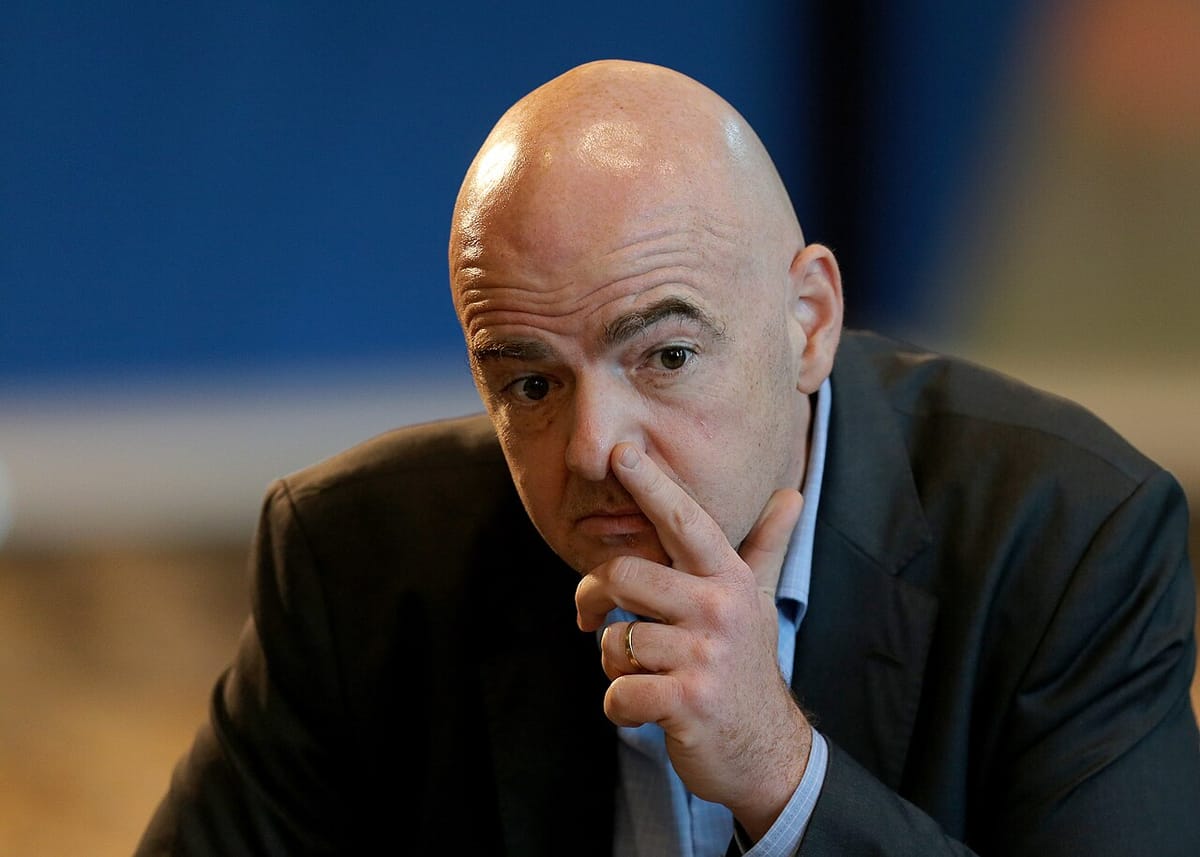
Gianni Infantino: FIFA leaders back under-fire president following crisis meeting as he apologises for 'mistakes' over World Cup sell-off
Summary: Gianni Infantino will remain as FIFA president after marathon crisis talks in Morocco, with the management board reaffirming its support for his leadership. Infantino apologised for "mistakes" made during his failed attempt to sell a stake in the World Cup, but believes he answers only to FIFA's 211 member associations.
Infantino survives crisis talks
Gianni Infantino has kept his job as FIFA president, for now, after seven hours of crisis talks in Morocco on Wednesday.
The governing body's management board reaffirmed its "full support" for Infantino following the meeting in Rabat. This came despite growing calls for him to resign over his failed plan to sell a stake in the World Cup.
Infantino admitted mistakes were made. He apologised for the "errors" in the process, but resisted pressure to step down.
What happened in Rabat
FIFA released a statement after the talks confirming that senior figures, including secretary general Mattias Grafström, backed Infantino's leadership. Grafström had criticised the World Cup plans just days earlier, calling them "a sad and reproachable series of events."
The two men were later seen together watching a Women's Africa Cup of Nations match in Rabat.
In a letter sent to national associations, Infantino and Grafström said they "sincerely apologised for the errors" in the proposal. FIFA also released a public statement warning it would "no longer tolerate any attacks on its integrity, good governance and due process."
The governing body admitted associations should have been consulted differently and said mistakes were made after the plan leaked to the media. A review has been promised, with findings due at the next FIFA Council meeting.
Background: the World Cup sell-off plan
The row began after Infantino proposed FIFA Forward Enterprise, a scheme to raise up to $4.2billion (£3.1billion) by selling minority stakes to outside investors. FIFA valued the new company at around $20billion (£15billion).
National associations were reportedly not consulted before the plan was drawn up. They were then given a deadline of mid-September to approve it, along with an incentive worth £30.1m.
The backlash was swift. UEFA said it had "lost confidence in the current FIFA leadership." The English FA called for a full review of FIFA's leadership. The head of the Jordan Football Association accused Infantino of "blackmail."
Infantino's own advisor, Carlos Cordeiro, resigned in protest, calling the plan a "bad deal." Arsène Wenger, FIFA's chief of global football development, also distanced himself publicly.
Pressure grew further this week. Former Portugal winger Luis Figo criticised Infantino's conduct in strong terms. Canadian prime minister Mark Carney, whose country co-hosted this summer's World Cup, said the situation should be "fatal" for Infantino's position.
Facing the scale of the backlash, FIFA withdrew the plan on Saturday.
What happens next
Infantino has made clear he believes only FIFA's 211 member associations can remove him from office. He is not due to face re-election until March.
Associations opposed to him do have other options. An emergency FIFA Council or Congress could hold a vote of no confidence. The deadline for candidates to declare themselves for the presidential election is 18 November.
Names being discussed as potential successors include AFC president Sheikh Salman bin Ibrahim Al Khalifa and CONCACAF president Victor Montagliani, though neither has confirmed any intention to stand. UEFA president Aleksander Ceferin has also been mentioned, but has not expressed public interest in the role.
The bigger picture
Infantino has survived this crisis, but the questions about his leadership have not gone away. FIFA now faces the task of rebuilding trust with several of its most powerful member associations before March's presidential election arrives.